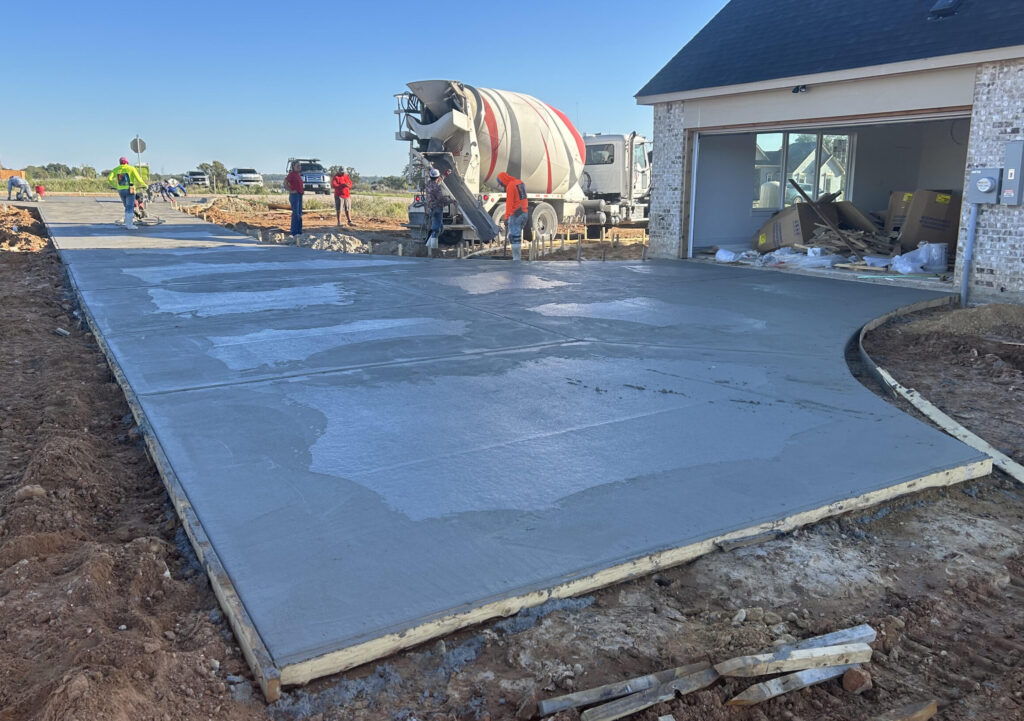
Concrete Cure Time: 7 Proven Rules for New Concrete in North Texas

By: Kevin Rios
Last Update: November 4, 2026
Posted In: Commercial, Residential
Table of Contents
Concrete Cure Time: 7 Proven Rules for New Concrete in North Texas
Your new driveway or patio is poured, the crew has packed up, and the surface already looks hard. So how long is concrete cure time before you can actually use it? Here in Weatherford, Fort Worth, and across DFW, it’s the question we hear most after a pour.
Quick answer: Concrete cure time is about 28 days to reach full design strength. Most residential concrete handles light foot traffic after 24 to 48 hours and passenger cars after about 7 days. Heavy trucks, RVs, and equipment should wait the full 28 days.
Those numbers shift with weather, mix, and slab thickness, and North Texas weather swings hard. Below, we explain what’s happening inside your slab and the seven rules that protect it.
What Is Concrete Cure Time?
Concrete cure time is how long new concrete needs to keep enough moisture and the right temperature to reach its designed strength. Concrete doesn’t harden by drying out. It hardens through hydration, a chemical reaction between cement and water.
That’s why “dry” and “cured” aren’t the same thing. A slab can look dry and feel solid in a few hours while it’s still far from full strength underneath. If it loses moisture too fast, especially in Texas heat, the reaction slows down and the concrete never reaches the strength it was designed for.
Curing vs. Drying: What’s the Difference?
- Drying is water evaporating from the surface. It happens fast and tells you very little about strength.
- Curing is the strength-building process. It continues for weeks, and the first 3 to 7 days matter most.
The National Ready Mixed Concrete Association notes that curing should continue for at least 3 to 7 days, and that concrete left in a dry environment can lose up to half of its potential strength compared to properly moist-cured concrete.
Concrete Cure Time Chart: When Can You Walk, Drive, and Park?
Use this timeline as a general guide for residential driveways, patios, and sidewalks.
| Time After Pour | What’s Safe | What to Avoid |
|---|---|---|
| 0–24 hours | Nothing. Keep people, pets, and kids off | Any foot traffic, hoses, or tarps |
| 24–48 hours | Light foot traffic | Bikes, wheelbarrows, dragging furniture |
| 3–7 days | Normal walking, light patio furniture | Cars and anything heavy |
| 7–10 days | Passenger cars and SUVs, away from the edges | Turning tires in place, heavy trucks |
| 28 days | Full design strength: RVs, heavy trucks, trailers | Very little; your concrete is ready for normal use |
Key takeaway: Day 7 and day 28 are the two milestones that matter. Plan your move-in, parking, and deliveries around them.
How Does Texas Heat Affect Concrete Cure Time?
Temperature changes concrete cure time more than anything else. Heat speeds up hydration, which sounds good, but concrete that gains strength too fast early often ends up weaker in the long run. Hot, dry, windy afternoons also pull moisture from the surface, which can lead to early cracking.
Cold weather causes the opposite problem. Below about 50°F, strength gain slows down. If fresh concrete freezes before it’s strong enough, the damage can be permanent.
North Texas gets both extremes, sometimes in the same week. That’s why timing your pour matters. Our guide on the best time of year to pour concrete in North Texas walks through each season.
7 Rules to Protect Your New Concrete While It Cures
1. Stay Off It for the First 24 to 48 Hours
Fresh concrete marks easily. Footprints, paw prints, and bike tires leave permanent marks. Block the area with cones or tape and let your neighbors know.
2. Wait at Least 7 Days Before Parking a Car
By about a week, most residential concrete is strong enough for a passenger vehicle. Pull straight in and out, and avoid turning your steering wheel while parked, which grinds the tires into the surface. If you’re still deciding on materials, our concrete vs. asphalt driveway comparison covers how long each takes before you can use it.
3. Keep Tires Off the Edges
The edges of a slab are its weakest point during early concrete curing. Keep tires toward the center of the driveway for the first few weeks.
4. Save Heavy Loads for Day 28
RVs, boat trailers, moving trucks, dumpsters, and concrete mixers for a neighbor’s project should all wait until the full concrete cure time has passed. Point delivery drivers to the street.
5. Let Your Contractor Handle Curing, Not the Garden Hose
Professional crews use proven curing methods like curing compounds or curing blankets. Repeatedly wetting a slab and letting it dry can do more harm than good, so ask your contractor before spraying it yourself.
6. Don’t Cover It With Tarps or Rugs
Plastic sheeting with wrinkles can leave dark streaks and blotchy color on a new slab. Leave doormats, rugs, and tarps off until it’s fully cured, unless your crew tells you otherwise.
7. Hold Off on Sealing and Watch the Forecast
Most sealer manufacturers recommend waiting about a month before sealing, so follow the product label. During cooler months, watch for freezes in the first few days and ask your contractor about protecting the slab.
What Happens If You Rush Concrete Cure Time?
Cutting concrete cure time short rarely causes instant failure, but it shortens the life of your slab. The most common problems are:
- Cracking, especially at edges and corners
- Surface dusting and scaling, where the top layer wears or flakes away
- Tire ruts and marks that never go away
- Lower long-term strength, which shortens your investment’s lifespan
Most of these are avoidable. We cover more early-damage warning signs in what is the downside of a concrete driveway (and how to avoid it).
Why Choose Rios Brothers for Your Next Concrete Project?
Since 1990, Rios Brothers has poured driveways, patios, foundations, and commercial flatwork across Weatherford, Parker County, and the DFW Metroplex. With 35+ years of experience in North Texas soil and weather, our crews plan every pour around the forecast and give every customer clear aftercare instructions, so you know exactly when your concrete is ready.
Whether you need residential concrete services, new construction foundations, or commercial concrete work, we’ll get it done right.
Concrete Cure Time FAQs
How long does concrete take to cure completely?
Concrete reaches its full design strength in about 28 days under normal conditions. It keeps getting slightly stronger after that, but 28 days is the industry benchmark.
How long before you can drive on new concrete?
Wait at least 7 days before driving a passenger car on new concrete. Wait 28 days before heavy trucks, RVs, or trailers.
How long before you can walk on new concrete?
Light foot traffic is usually fine after 24 to 48 hours. Avoid dragging anything heavy across it for the first week.
Does hot weather speed up concrete cure time?
Heat speeds up early strength gain, but it can reduce long-term strength and increase cracking if the concrete loses moisture too fast. That’s why proper curing matters most in Texas summers.
Can it rain on new concrete?
Light rain after the surface has set usually isn’t a problem. Heavy rain within the first few hours can damage the finish, so contractors watch the forecast before pouring.
When should I seal new concrete?
Most sealers call for waiting about 28 days, until the concrete has fully cured. Always follow the sealer manufacturer’s label.
Planning a driveway, patio, or foundation? Get your free estimate from Rios Brothers today and let our team handle it from pour to cure.

Posted In:
Related Blog Articles
- November 4, 2026
Concrete Cure Time: 7 Proven Rules for New Concrete in North Texas
Concrete Cure Time: 7 Proven Rules for New Concrete in...
- October 6, 2026
Concrete Patio Ideas: 7 Smart Tips for North Texas Backyards
If you’re planning a backyard upgrade in Weatherford, Fort Worth, or...
- September 22, 2026
Tree Trimming or Tree Removal? Signs Every DFW Homeowner Should Know
Deciding between tree trimming and tree removal is one of the...