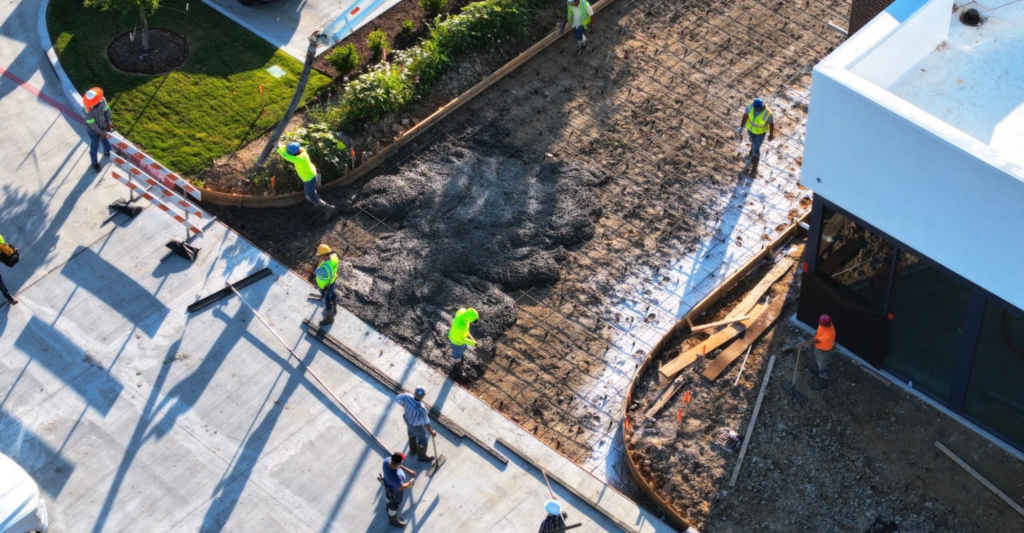
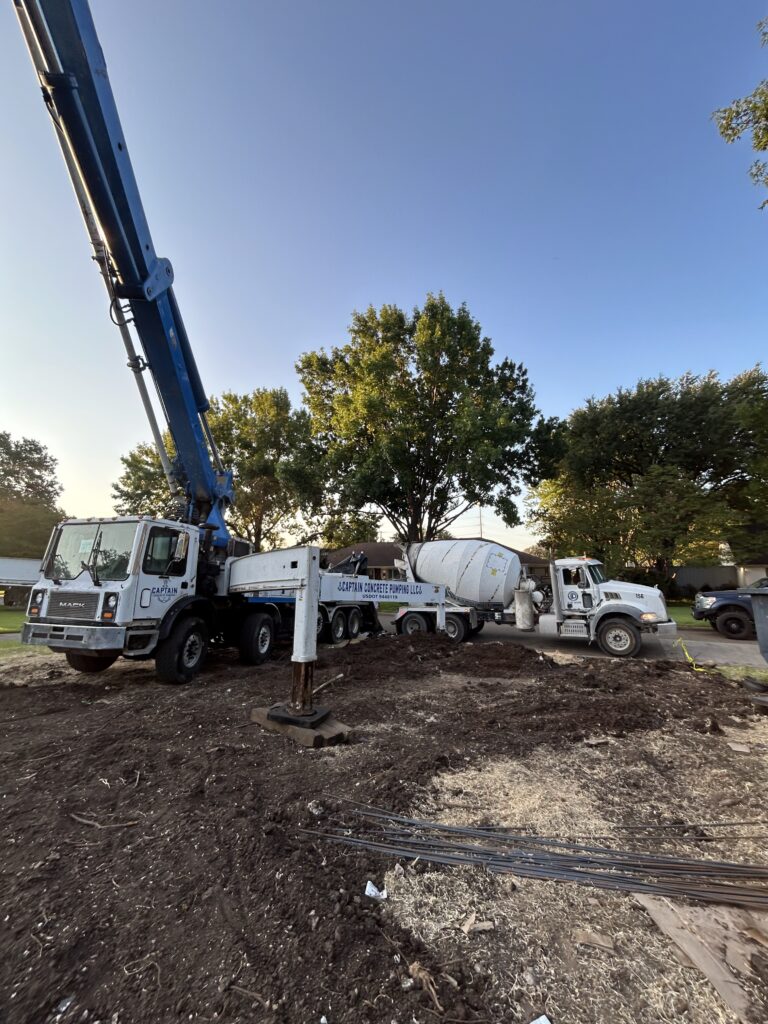
Most people think of a home’s strength in terms of its walls, roof, and windows, but the true backbone of every structure lies beneath the surface — the foundation. A properly designed and poured concrete foundation is what keeps a home stable, level, and protected for generations.
In modern construction, concrete is the most widely used building material. It’s valued for its strength, versatility, and cost-effectiveness, making it the go-to choice for foundations across Texas
The Hidden Role of Concrete Slabs in Modern Construction
Concrete slabs serve as the base of nearly all modern homes and buildings. Beyond simply supporting walls, they protect against soil movement, moisture intrusion, and long-term settling.
Different slab designs are used depending on climate, soil type, and building requirements, all of which are key factors in North Texas construction.
Concrete slabs serve as the base of nearly all modern homes and buildings. Beyond simply supporting walls, they protect against soil movement, moisture intrusion, and long-term settling.
Different slab designs are used depending on climate, soil type, and building requirements, all of which are key factors in North Texas construction.
Type of Concrete Slab
Description
Common Use
Slab-on-Grade
Poured directly on the ground; reinforced with steel rebar.
Ideal for warm climates with stable soil, common across North Texas.
T-Shaped Foundation
Footings extend below the frost line, supporting vertical walls.
Used in colder regions with deep frost penetration.
Frost-Protected Slab
Insulated design that prevents frost from damaging the slab.
Common in energy-efficient homes in northern climates.
Raft or Mat Foundation
Spreads weight across a large surface area.
Best for poor soil conditions or larger commercial buildings.
Every slab type acts as the first line of defense against soil shifts and moisture — two major concerns in Texas’s clay-rich soils.
How Proper Load Distribution Prevents Structural Problems
Every building places a load (weight) on its foundation. The purpose of a concrete foundation is to spread that load evenly across the soil beneath it.
When loads are not properly distributed, homes can experience cracking, shifting, or even structural failure.
Foundation Problem
Cause
Result
Uneven Settlement
Poor load distribution
Cracked walls and/or floors
Soil Movement
Expansive clay or weak soil
Foundation heaving or sinking
Overloaded Structure
Excessive weight on undersized footing
Sudden structural failure
That’s why experienced builders and engineers design foundations based on both soil conditions and structural demands — achieving the right balance between weight, soil support, and reinforcement.
Why Concrete Foundations Save Money Without Compromising Quality
It’s a common misconception that higher cost means stronger construction. In fact, concrete foundations are both strong and cost-efficient when designed correctly.
Concrete is made from cement, water, sand, and aggregate — all relatively affordable materials. When combined properly, they create a long-lasting and low-maintenance base for any home.
Factor
Concrete Advantage
Initial Cost
Lower than steel or deep pier foundations.
Maintenance
Minimal upkeep required.
Energy Efficiency
Helps regulate indoor temperature by storing heat and coolness.
Longevity
Lasts 50–100 years or more with proper care
Over time, a solid concrete foundation prevents expensive problems like water intrusion, uneven settling, and cracked plumbing, saving homeowners thousands of dollars in repairs.
Built to Last: The Strength of Reinforced Concrete Systems
Concrete is naturally strong under compression (pushing forces) but weak under tension (pulling forces). To overcome this, builders use steel reinforcement — either rebar or wire mesh — inside the concrete.
This combination, known as reinforced concrete, provides both compressive and tensile strength, making it extremely durable under stress, temperature change, and soil movement.
Benefits of reinforced concrete include:
Resists cracking and shifting from soil expansion
Withstands extreme weather, including heat and flooding
Won’t rot, warp, or attract termites
Requires less maintenance and lasts decades longer
Because of its durability, reinforced concrete also supports sustainable building practices by reducing material waste and the need for future replacements.
Critical Site Factors That Make or Break Foundation Performance
Even the strongest mix can fail if site conditions aren’t properly evaluated.
Before construction begins, engineers and builders should assess soil composition, drainage, slope, and groundwater levels.
Site Factor
Importance
Potential Issue if Ignored
Soil Type
Determines depth, reinforcement, and design.
Uneven settling or cracking
Drainage
Prevents water pooling under the foundation.
Erosion, water damage.
Slope
Ensures proper runoff and stability.
Sliding or uneven pressure.
Groundwater Level
Affects waterproofing and design.
Moisture and basement issues
Proper grading, compaction, and drainage systems are vital in areas like North Texas, where expansive clay soils can swell and shrink dramatically with rainfall and drought.
Engineering Precision: The Science Behind Long-Lasting Concrete Design
A durable foundation doesn’t happen by chance — it’s the result of precise engineering and careful execution.
Key elements of foundation design include:
Engineering Element
Purpose
Soil Analysis
Determines load-bearing capacity and required footing design.
Load Calculations
Ensures the structure’s weight is properly distributed.
Concrete Mix Design
Controls strength, flexibility, and curing speed.
Steel Reinforcement
Provides tensile strength and crack resistance.
Proper Curing
Maintains moisture balance to minimize premature cracking.
When these factors are managed correctly, a well-built concrete foundation can easily last a century or more.
Conclusion: Building with Strength and Trust
A home is one of the largest investments most people will ever make — and its foundation determines how well it holds that value. Choosing the right materials, design, and professionals ensures that your home stands strong for generations.
One trusted name in North Texas is Rios Brothers Concrete Services, based in Weatherford, Texas. With over 35 years of experience in residential, commercial, and new construction concrete, Rios Brothers has earned a reputation for precision, reliability, and quality workmanship across the Dallas–Fort Worth area and beyond. When you build on a foundation laid by experts like Rios Brothers Concrete Services, you’re not just building a house — you’re investing in strength, stability, and peace of mind.
FAQs About Strong Concrete Foundation
Q1. What makes a concrete foundation strong and durable?
Ans: A strong foundation comes from proper load distribution, steel reinforcement (rebar or wire mesh), and a mix design suited to soil conditions. Together these prevent cracking, shifting, and structural failure over time.
Q2. How long does a concrete foundation typically last?
Ans: A well-built concrete foundation can last 50 to 100 years or more with proper design, reinforcement, and maintenance.
Q3. Why is soil type important for foundation design?
Ans: Soil type determines the depth, reinforcement, and design of a foundation. Expansive clay soils, common in North Texas, can swell and shrink with rainfall, so proper grading and drainage are essential to prevent uneven settling.
Q4. Is a concrete foundation cost-effective compared to other options?
Ans: Yes, concrete foundations have lower initial costs than steel or deep pier foundations, require minimal maintenance, and help regulate indoor temperature, saving money over the life of the home.
Q5. What happens if a foundation isn’t properly engineered?
Ans: Poor engineering can lead to uneven settlement, soil movement issues, and even sudden structural failure, resulting in costly repairs down the line.
Kevin Rios
Posted In:
As the driving force behind Rios Brothers Concrete, Kevin Rios brings years of hands-on experience and deep industry knowledge to every project he leads. With a background rooted in craftsmanship and a commitment to excellence, Kevin has built a reputation for delivering concrete work that stands the test of time—both structurally and aesthetically. Under his leadership, Rios Brothers Concrete has grown into a trusted name in new construction concrete, completing everything from intricate residential foundations to large-scale commercial projects. Kevin’s attention to detail, clear communication, and insistence on quality workmanship have become the hallmarks of the company’s success. Respected by clients and peers alike, Kevin continues to set the standard for professionalism and precision in the concrete industry—always leading by example and ensuring every pour reflects the pride and integrity that define Rios Brothers Concrete.
See all articles written by Kevin Rios